
"The New Portugal"
A series on Europe's national renewal movements

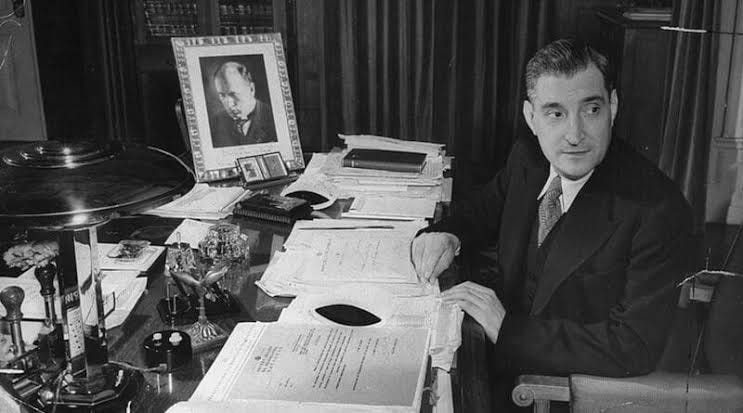
Torn to its very core by a succession of bloody revolutions, politically demoralized by decades of partisan strife, corrupted by parliamentary mismanagement, financially on the brink of ruin, at the mercy of foreign influences at home, and a pawn of foreign powers abroad—this was the Portugal that presented itself to us, a country of ancient culture and a great history stretching back centuries, when on May 27th, 1926, a revolutionary uprising led by Marshal Gomez da Costa and Generals Carmona and Mendez Cabecada seized power in the state to usher in a new era of Portuguese history, one dedicated to the rebirth of the people and the restoration of the honor of their name.
Following the loosening of a once-solid state structure through the prelude to a liberal, parliamentary-democratic monarchy; following the assassination of King Don Carlos and his eldest son in 1908 by agents proven to have been hired by Freemasons, and following the accession to the throne of the underage Don Manuel and his expulsion in the wake of a revolution, also instigated by Freemasons, the Republic was proclaimed on October 5th, 1910—a development that would bring upon the Portuguese people a series of continuous uprisings, parliamentary intrigues, and cases of corruption.
There were 16 revolutions and 14 changes of government between 1910 and 1926: these 16 revolutions and 14 changes of government in 16 years plunged the country into chaos, and the Masonic Republic became an object of widespread ridicule throughout the world, where the “revolutionary”—or rather, the “revolution-maker”—had become, so to speak, an officially recognized profession.
The attempt by an energetic president, Sidonio Paës, in December 1917 to counter the impending dissolution of the state and the nation through a coup d’état and the establishment of a dictatorship foundered at the very outset: ten days after the dictatorship was proclaimed, Paës was dead, for a Freemason had assassinated him at the Central Station in Lisbon.
For nine years after this assassination, the unfortunate country, at the mercy of an international Masonic clique, had dragged itself from revolution to revolution and from one change of government to the next, until—as mentioned at the outset—the national uprising led by the three generals, supported by the army and large segments of the population, put an end to these conditions: after the capture of the capital, da Costa proclaimed a military dictatorship, only to hand over the office of dictator—which he had assumed—to General Carmona, the current president, shortly thereafter.
In protracted battles that dragged on until 1928, the military dictatorship purged the country of the professional revolutionaries who refused to give up their cause: even as late as February 1927, there were Bolshevik counterrevolts led by Freemasons in Oporto and Lisbon, which could only be suppressed by deploying all the power of the state.
To the country’s relief, the flag of Moscow hoisted by the mutinous Bolsheviks at the Lisbon arsenal was taken down again within a few days - thus, a brief but one of the bloodiest internal political conflicts Portugal had ever experienced was over, and the new government did not hesitate to strike back forcefully to finally root out the creeping evil of revolution: it openly declared Freemasonry to be the instigator of the bloody fratricidal conflict and decreed a ban on lodges.
In 1928, the first phase of the 1926 national revolution was concluded with the successful pacification of the country—a spontaneous uprising by the generals, driven solely by the will of the people to restore order in the country, had eliminated a system that left behind a terrible legacy: the financial system was in shambles, the economy ruined, the administration corrupt, and the spirit of the people enfeebled in every respect.
In this state, the global economic crisis also made itself felt in Portugal—despair was widespread, and the government turned in desperation to the League of Nations for financial aid; however, when the League demanded that, in exchange for a bond guarantee, it be granted unrestricted control over Portuguese finances, the people’s national self-confidence was stirred by such an outrageous imposition.
The name on everyone’s lips was that of a man from whom salvation and the “miracle” of economic and moral restoration were expected: Oliveira Salazar, professor of economics and finance at the ancient and famous University of Coimbra, who had previously resigned after a three-day stint as minister because he had been denied the special powers he had demanded.
Beginning on April 27th, 1928—the day Salazar, the ascetic professor, was appointed became Portugal’s Minister of Finance, and who, in the years that followed, would go on to assume the office of Prime Minister as well, thanks to his outstanding leadership qualities—marks the beginning of a material and moral resurgence of the Portuguese people, one that can stand shoulder to shoulder with the achievements of the great national uprisings in Europe.
It is the work of two men: Carmona, who laid the groundwork for it by pacifying the country and overthrowing the old regime, and Salazar, who adopted as the guiding principle of his actions what he expressed in a speech in May 1935 after seven years in office:
“Our generation is truly and genuinely called upon to make sacrifices; it shall be our honor and glory to be able to say to our children one day: ‘We sacrificed ourselves for you, for with all the faith and strength that are our own, we brought about the true revolution, the revolution that built a better world for you.’”
Immediately upon assuming his ministerial post, Salazar set about with unyielding energy to radically eradicate the laxity in the administration of public finances and corruption.
He succeeded in achieving what had been deemed impossible: in a very short time, the public finances were restored to health, and he then immediately set about implementing a generous reconstruction program.
Much—almost everything in Portugal—had to be rebuilt or constructed from scratch, and both the reconstruction and new construction efforts were undertaken with an energy not thought possible in Portugal: a major road-building program was launched; the railroads were reorganized, and for the first time in Portugal, trains arrived and departed without delay; new train stations were built; work began on expanding the inadequate telephone network; silted-up harbors were dredged and equipped with modern port facilities; the army was expanded and supplied with modern weapons, and finally, the outdated fleet was equipped with new and well-equipped ships.
Hand in hand with economic reconstruction and the recovery of the economy came the introduction of a modern social policy: work began on the construction of housing for workers, and various social welfare services were introduced and expanded; last but not least, efforts were made to support and promote the struggling peasantry, and the government initiated the construction of extensive agricultural irrigation systems.
As in the new Germany, so too in the new Portugal was the financing of all these generous public works carried out without incurring further foreign debt and while maintaining strict discipline in the national budget.
Much has been accomplished in the eight years under Salazar’s regime, and much still remains to be done, but what has been done has been achieved through the country’s own efforts and financed with its own resources.
The path taken by Oliveira Salazar can be divided into three stages:
The first stage was devoted to restoring order to the national budget and laying the groundwork for economic reconstruction, which was a complete success.
The second stage was devoted to carrying out the physical reconstruction, which is still in full swing today and whose success is beyond doubt.
The first two stages also encompass all efforts toward the moral reconstruction of the people—efforts aimed at self-reflection and the revival of traditional virtues.
The third stage, which was initiated by the adoption of a new constitution in February 1933 and is likewise in full progress today, is dedicated to the rebuilding of the state.
Proceeding from the correct understanding that parliamentary democracy is an outdated system derived from liberalist ideas now recognized as erroneous, Salazar seeks new ways of organizing the state: in contrast to liberalism, he finds the primary organic political element of the state not in the individual but in the family; likewise in contrast to liberalism, he declares state intervention in all matters affecting the general public to be justified.
The constitution adopted by the new Portugal—which was approved by a general referendum in March 1933—abolishes the old democratic-parliamentary system and introduces a corporative order into the state; in addition to the President of the Republic, who is supported by his ministers in the Council of State, the new constitution also establishes two other supreme state organs: a Chamber of Estates and a National Assembly, with the Chamber of Estates required to review all laws to be enacted by the National Assembly.
The spirit of the new state, which is to be brought to life through the new constitution, is characterized by the father of this constitution, Oliveira Salazar, in an interview as follows:
“The spirit of the new state lies in the ultimate purpose it pursues and in the means it employs.
Its ultimate purpose: everything the new Portugal does is directed toward the goal of serving the interests of the nation - this means that the state’s means in pursuing these goals are neither arbitrary nor unlimited, for they are determined and limited by the laws of Christian and moral order.”
More than a decade has passed since Portugal’s path began to be guided by the energetic hand of national, responsible men: we Germans observe the successes achieved along this path with admiration and heartfelt sympathy, and we perceive in many respects the common ground between Portugal’s heroic struggle and our own.
However, even today Moscow continues to attempt—either directly or through its allies—to create difficulties for the Portuguese state and its leaders - we recall here the assassination attempt on Salazar, as well as Czechoslovakia’s refusal to supply arms under the flimsiest of pretexts.
And yet, the enemy has been identified, and Portugal knows how to defend itself.
From “Die Welt vor der Entscheidung” (The World on the Brink of a Decision), published by the Supreme SA Leadership in 1938
From the picture here, they also wrote an article on Brasil?